
Yes. Siding goes up all year in the Seattle area, and a good crew can install it in the rainy season without trapping water in your walls. If siding could only be installed on dry days, nobody west of the Cascades would ever get a new house.
The better question is how a crew works in the rain, because that is where the difference between a careful installer and a careless one shows up. Here is what rain actually changes on a siding job, what it does not, and what you should expect to see from anyone working on your house between October and April.
What Seattle rain is really like on a job site
Most of our rain falls between October and April, but it rarely falls the way people picture it. The typical winter day here is gray, cool, and damp, with light drizzle that comes and goes. True downpours happen, and atmospheric rivers roll through a few times a season, but a steady inch of rain in an afternoon is the exception.
Our winters are also mild. Daytime highs usually sit in the 40s, and hard freezes that last more than a day or two are uncommon near the Sound. That matters, because cold is a bigger limit on siding work than wet is. More on that below.
Why rain is not the enemy you think it is
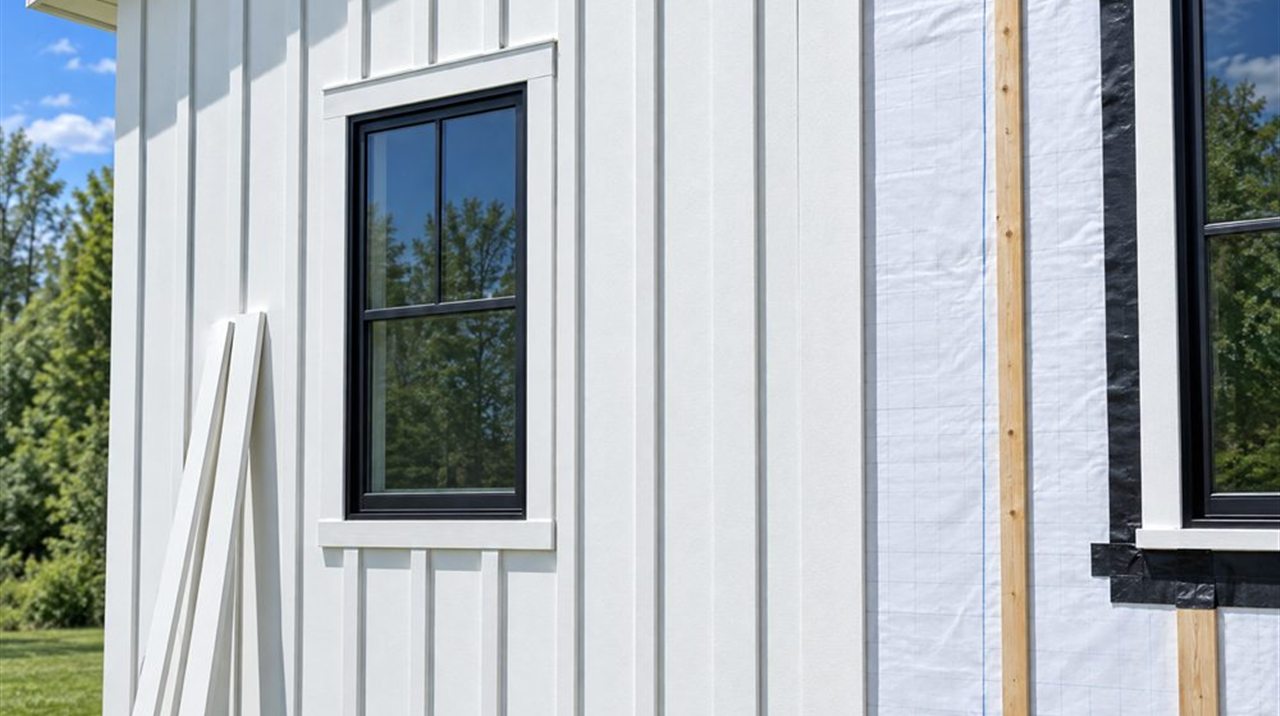
Siding is not what keeps your house dry. It is the first layer, the one that sheds most of the water and takes the sun and wind. Behind it sits the layer that does the real work: a weather resistive barrier (house wrap or building paper) lapped shingle style from the bottom up, with flashing at every window, door, and penetration. On a well built wall, some water always gets behind the siding. The barrier and the flashing send it back out.
That is why the order of work matters more than the forecast. Once the barrier and flashing are on, that part of the wall is protected from rain, whether the new siding goes over it that afternoon or two days later.
How we protect an open wall
The risky moment on any siding job is the stretch of time between pulling the old siding off and getting the new barrier on. During the rainy season we plan every day around shrinking that window.
- One wall at a time. We only tear off what we can wrap and flash before we leave. No wall sits open overnight with bare sheathing facing the weather.
- Forecast driven sequencing. We watch the hourly forecast and open walls during the drier stretches of the day. If a heavy band is coming through, we spend that time on trim, soffits, or a wall that is already wrapped.
- Tarps ready on the scaffold. If a shower surprises us, the open section gets covered in minutes, not after the crew finishes the course they are on.
- Moisture checks before we close anything. We put a moisture meter on the sheathing before the barrier goes over it. Wood sheathing needs to read dry, generally under about 19 percent, before we seal it in. If it is wet, it gets time and airflow first.
- Dry material storage. Siding and trim are stacked flat, off the ground, and under cover. Fiber cement boards that are installed wet can shrink as they dry and open gaps at the joints, so we do not hang wet boards.
The rotten sheathing question
Many homeowners in this area replace siding because something is already wrong behind it. When we open a wall and find soft or dark sheathing, we cut it out and replace it that same day, then wrap it. Rain actually helps here in one way: water that is actively getting in shows you exactly where the old flashing failed. We would rather find that leak while it is dripping than guess at it in August.
What rain does change
Being honest about the limits is part of the job. A few things do slow down in wet weather.
Caulk and paint. Sealants and field paint have minimum temperatures and need a dry surface to bond. Most need at least 40 degrees and no rain for several hours after application, though some products are rated lower. On a wet week we may hang siding and come back for caulking and touch up on the next dry day. If you choose a factory finished product like James Hardie ColorPlus or prefinished LP SmartSide, most of that concern goes away, since the color is baked on before it reaches your driveway.
Wind. Strong wind is a bigger schedule problem than rain. It makes ladder and scaffold work unsafe and turns a loose sheet of house wrap into a sail. On a truly windy day we stay off the high walls.
Freezing weather. Snow and ice, or a hard freeze, stop exterior work for everyone. Around here that means a handful of days a year, not months.
Timeline. A job that takes eight working days in July may take ten or twelve calendar days in January, because some of those days get shortened. We build that into the schedule up front, so you are not surprised.
Material by material
James Hardie fiber cement: installs well in cool weather. The main rule is keeping the boards dry before they go on, which is a storage question, not a weather question.
LP SmartSide engineered wood: handles damp conditions well thanks to its treated core and factory coating. Primed boards need their finish paint within a window set by the manufacturer, which gives you time to wait for a dry spring week if you want.
Vinyl: the least bothered by rain, but it gets stiffer in the cold. Installers cut it more carefully and leave a slightly larger expansion gap at the ends so the panels have room to grow when summer comes.
Cedar: the most sensitive to moisture. It should go up dry, be stored under cover, and ideally get its finish soon after. We can install it in the rainy season, but it takes the most planning.
Questions to ask any contractor about rainy season work
- How much wall will you open at once, and will anything be left uncovered overnight?
- Do you check the sheathing with a moisture meter before wrapping it?
- Where will the siding be stored on site, and how is it kept dry?
- What happens to the schedule if a storm comes through mid job?
- When will caulking and paint happen if the weather will not cooperate?
A crew that works here year round will have quick, specific answers. A vague answer to the first question is the one to worry about.
The short answer
Rain does not ruin a siding job. Bad sequencing does. With a crew that opens small sections, protects them the same day, and checks for moisture before closing up the wall, the rainy season is a normal working season. If you are wondering whether you should wait until summer, we wrote about that too in When Is the Best Time of Year to Install Siding?
If you want us to look at your house and tell you what a winter schedule would look like, book a free walkthrough. We will give you a straight answer on timing, rain or shine.