
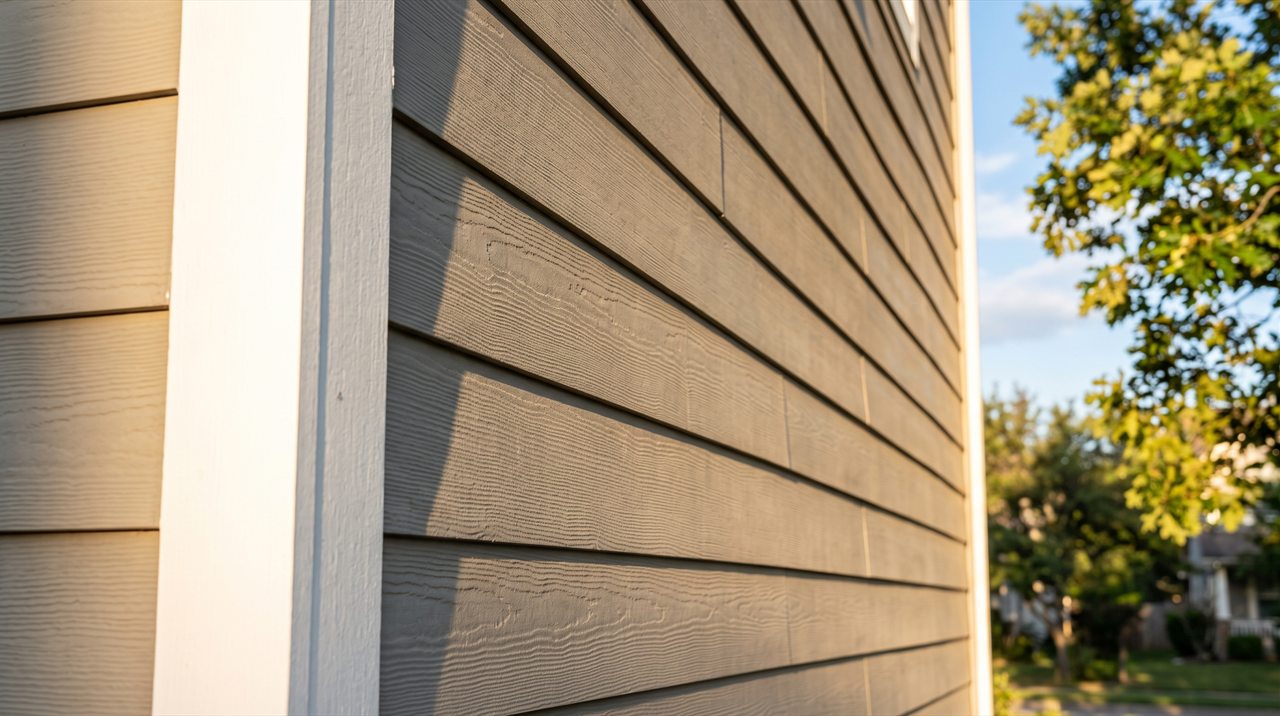
Every homeowner wants one number. The honest answer is that replacing the siding on a typical single family house in the Puget Sound area lands somewhere between 14,000 and 45,000 dollars. That spread is wide because the job is really six or seven smaller jobs stacked on top of each other. Once you know what those pieces are, the number stops feeling random, and you can tell a fair bid from a bad one.
Start with wall area, not house size
Siding is priced by the square foot of wall, not by the square footage of your floor plan. A 2,000 square foot ranch and a 2,000 square foot two story house have very different amounts of wall. The ranch spreads out under a big roof and has less vertical surface. The two story stacks the same living space onto a smaller footprint, which usually means more wall and more time working off ladders or staging.
As a rough picture, most homes in the 1,800 to 2,400 square foot range around here have somewhere between 1,800 and 3,000 square feet of wall once you subtract the windows and doors. That wall number is what drives the estimate, and it is the first thing any contractor should measure rather than guess.
Material is the biggest single lever
Installed cost means material and labor together. In our market the ranges usually look like this:
- Vinyl: roughly 7 to 12 dollars per square foot. The least expensive way to get a clean, uniform wall that sheds water.
- LP SmartSide engineered wood: roughly 10 to 16 dollars per square foot. Warmer look than vinyl, lighter and faster to hang than fiber cement.
- James Hardie fiber cement: roughly 12 to 20 dollars per square foot. The regional default, and for good reason. It is heavy, stable, and it does not mind rain.
- Cedar: roughly 15 to 30 dollars per square foot. Beautiful, and it asks for stain or paint on a schedule.
- Metal panel: roughly 14 to 28 dollars per square foot. Common on modern elevations and on shop buildings.
Those ranges already include normal labor. They do not include the items below, and those items are exactly where two bids on the same house start to pull apart.
Tear off and disposal
Someone has to take the old siding off the house and haul it away. On a 2,400 square foot wall that is usually two to four dumpsters and a full day or two of labor. Budget 1,500 to 4,000 dollars depending on how many layers are up there and what they are made of.
Older homes sometimes have two layers, because a previous owner covered the original wood with aluminum or vinyl instead of removing it. That doubles the tear off. Homes built before 1980 may also have siding or underlayment that contains asbestos, which has to be tested and handled under state rules. Testing is cheap. Skipping it is not.
What we find behind the old siding
This is the part no calculator can predict, and the part that turns a good bid into a bad surprise. Once the wall is open we can see the sheathing, the framing, the weather barrier, and the flashing around every opening. In a wet climate, some rot is normal. A little is cheap. A lot is not.
Typical repair costs once the wall is open:
- Replacing a few sheets of damaged sheathing: 400 to 1,200 dollars.
- Rebuilding a rotted rim or a section of studs: 1,500 to 6,000 dollars.
- New weather barrier across the whole house: 1,200 to 3,000 dollars, and it is almost always worth doing.
- New flashing at windows, doors, and roof to wall joints: 800 to 2,500 dollars.
A good contractor prices the visible work, then writes a clear allowance or a unit price for hidden damage, so you know the cost per sheet or per foot before anyone opens a wall. A bad contractor leaves it out entirely and hands you a change order in week two.
Trim, corners, and the details
Siding is the field. Trim is everything that stops the field: corner boards, window and door casing, frieze boards, water table, soffit, fascia, and the transitions where one material meets another. Trim is slow work, it uses a lot of material per foot, and it is the first thing your eye lands on when it is done badly.
On most houses trim runs 15 to 25 percent of the total. A house with many windows, dormers, gables, and bump outs will sit at the top of that range or above it. A simple box with four windows per side will sit at the bottom. If one bid is thousands lower than another, this is often where the difference hides, so compare the trim line by line.
Height, access, and site conditions
A single story house with a flat lawn all the way around is the cheapest possible job. Add a second story and you add staging. Add a steep lot, a retaining wall, a deck, mature landscaping, or a neighbor six feet away, and you add setup time on every wall. Three stories or a walkout basement can add 10 to 20 percent on labor alone.
Permits, and a few things people forget
Most cities in our area require a permit for full siding replacement, and the fee usually runs 200 to 800 dollars. Some jurisdictions also want an inspection of the weather barrier and flashing before the siding goes on, which is a good thing for you. Beyond the permit, remember gutters and downspouts that have to come off and go back on, exterior lights and hose bibs that need new blocks, and paint if your material does not arrive with a factory finish.
Why online calculators miss
A calculator multiplies a guess at your wall area by an average price per square foot. It does not know that your house has 22 windows, or that the north wall grows moss, or that the previous owner covered cedar with vinyl in 1994. Use a calculator to set expectations. Use a measured walkthrough to set a budget.
How to compare two bids
Put them side by side and check that both include the same wall area, the same product line and thickness, tear off and disposal, a new weather barrier, flashing at every opening, all trim, paint or factory finish, permits, and a written unit price for hidden rot. If one bid is missing three of those, it is not cheaper. It is smaller.
Ask for the labor warranty in writing and the manufacturer warranty on the product. Ask who is actually on the roof and the ladders, employees or a crew hired for the week. Ask how long the job blocks your driveway. Those answers tell you more about the final invoice than the number on the front page.
What we do
We measure the walls, look at the sheathing at every opening we can reach, photograph the trouble spots, and give you a fixed price with a written unit price for anything hidden. If the wall opens up clean, you pay the fixed price. If it does not, you already know the rate. No guessing, and no phone call halfway through the week asking for another eight thousand dollars.
Try the online estimator for a range in about two minutes, or book a free on site measurement and get the real number.