
Manufacturers publish long numbers. Fifty years. Lifetime. Limited lifetime. Those numbers describe the material sitting in a lab, not a wall on a shaded lot in a rainy climate. What follows is what we actually see on houses in this region, which is usually shorter than the brochure and longer than the internet thinks.
Vinyl: 25 to 40 years
Vinyl outlasts its reputation. The panels themselves do not rot and do not absorb water, so what ends vinyl is usually cosmetic. Color fades, especially on south and west walls and especially in dark shades. Cold weather makes it brittle, so a ladder bump or a stray rock can crack a panel in January that would have bounced off in July.
Thicker vinyl lasts longer. Panels at .044 inches and above hold their shape and resist wind better than the builder grade product at .035 inches. If your vinyl still looks straight and the color is even, it is doing fine regardless of age.
What ends it: faded or chalky color, cracked panels you cannot match, or warping near a heat source.
James Hardie fiber cement: 40 to 50 years
The board itself effectively does not wear out. It does not rot, insects ignore it, and it does not burn. What needs attention is the finish. A factory applied finish typically carries a 15 year warranty and often looks good past that. A field painted board will want repainting every 10 to 15 years.
James Hardie fiber cement fails early in only a few ways, and all of them are installation problems rather than material problems. Boards cut and installed with the bottom edge too close to grade will wick moisture. Nails driven too deep crack the board and let water into the core. Butt joints without proper flashing behind them let water past.
What ends it: almost always the wall behind it, or a decision to change the look, rather than the siding itself.
Engineered wood: 20 to 30 years
Engineered wood is the most installation dependent material on this list. Installed well, with sealed cut ends, proper clearance at the bottom, good flashing, and a finish that gets maintained, it can run 30 years and look great the whole time. Installed carelessly, it can swell at the edges in under ten.
The failure pattern is consistent. Water finds an unsealed cut end or an unprotected bottom edge, the board absorbs it, and the edge swells and delaminates. Once that starts on one board it usually shows up on its neighbors, because they were cut the same day by the same person.
What ends it: swollen and delaminating edges, usually starting low on the wall or at cut ends around windows.
Cedar and natural wood: 20 to 40 years, entirely up to you
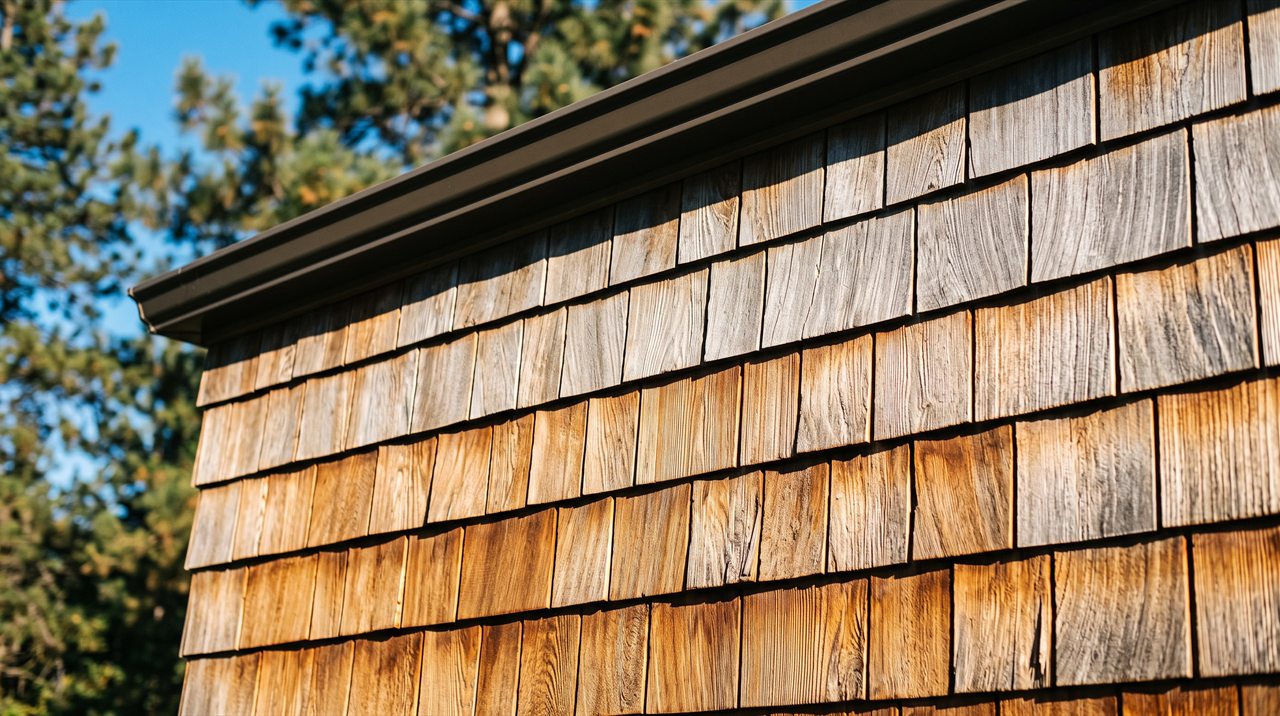
Cedar has the widest range on this list, and the spread is almost entirely about maintenance. A cedar wall that gets stained every 5 to 8 years and keeps its flashing intact can pass 40 years and still be repairable board by board. A cedar wall that gets ignored for 15 years will be soft at the bottom courses and cracked at the ends.
Cedar shingles and shakes generally outlast bevel siding, because water sheds off the smaller pieces faster and because a single damaged shingle is a five minute fix.
What ends it: deferred finish. The material is fine. The schedule is the problem.
Metal panel: 40 to 60 years
Steel and aluminum panels with a quality factory coating are the longest lasting option most homeowners will consider. The coatings carry 30 to 40 year warranties against chalking and fading, and the metal underneath keeps going after that.
Aluminum will not rust but dents easily and shows every ding permanently. Steel resists dents better but needs its coating and its cut edges intact, because bare steel in a wet climate will corrode.
What ends it: dents and finish wear, not structural failure.
The three things that actually decide your number
1. Installation. This is the biggest factor by a wide margin, bigger than the material choice. We regularly open up 35 year old walls in good shape and 12 year old walls that are soaked. The difference is almost never the product. It is whether the flashing, the weather barrier, the clearances, and the fastening were done right.
2. Exposure. A south wall takes sun and thermal cycling. A north wall stays damp and grows moss. A wall under a big fir with no gutter above it takes constant drip. The same siding on the same house can have a 15 year spread in life from one wall to another.
3. Maintenance. Washing a wall once a year and keeping the caulk and finish current is not glamorous and it adds years. Most premature failures we see started as a small, ignorable problem two or three years earlier.
What the warranty actually covers
Read the warranty before you rely on it. Most material warranties are prorated, meaning the payout drops every year, and most cover material only, not the labor to remove and reinstall. Many are voided by improper installation, which puts the burden back on the contractor.
That is why the workmanship warranty from the person doing the work matters as much as the manufacturer paper. Ours is written down and covers our labor for ten years. See exactly what that includes.
If you want an honest read on how much life your current siding has left, book a free walkthrough. We will tell you if the answer is another decade.