
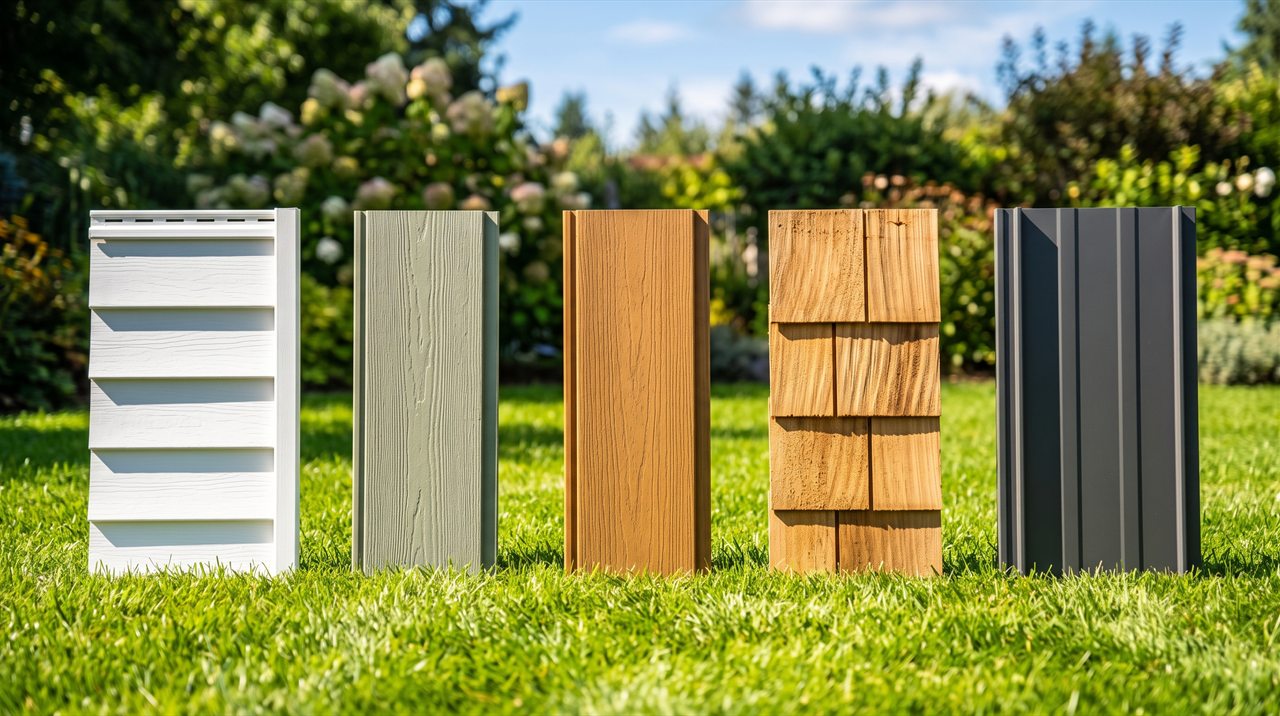
Ask five contractors what the best siding is and you will get five answers, usually the one they install most. That is not helpful. The better question is what your house needs, because a material that is perfect on a dry lot in Arizona can be a slow leak waiting to happen on a shaded north wall in Washington.
Here is how we actually think about it, and what each of the five common materials is good and bad at.
Four questions that narrow it fast
How long are you staying? If you plan to sell in three years, spending 40,000 dollars on cedar rarely comes back. If this is the house you retire in, the cheapest option is usually the most expensive one over 30 years.
How much maintenance will you really do? Be honest. Some materials want attention every few years. If nobody in your household is going to get on a ladder with a stain brush, pick a material that does not ask for it.
What is your wall exposed to? Constant shade, heavy tree cover, sprinkler spray, wind driven rain off open water, or full afternoon sun all push you toward different products.
What does the house want to look like? A 1920s craftsman and a 2015 modern box are not asking for the same thing. Siding that fights the architecture always looks off, no matter how good the install is.
James Hardie fiber cement
This is the regional default around Puget Sound, and it earns it. James Hardie fiber cement is made of cement, sand, and cellulose fiber. It does not rot, it does not feed insects, and it does not burn. It holds paint extremely well, and factory finished versions arrive with a baked on color that carries a long finish warranty.
Good at: wet weather, fire resistance, dimensional stability, holding a crisp painted look for 15 years or more.
Not great at: weight and cost. It is heavy, so installation is slower and takes more people. Cutting it makes silica dust, which means proper tools and masks. Expect 12 to 20 dollars per square foot installed.
Pick it if: you want the safest all around choice for a rainy climate and you are staying in the house.
Vinyl
Vinyl gets dismissed more than it deserves. Modern vinyl is thicker than the 1990s product people remember, comes in far better colors, and includes insulated versions that add real value to the wall. It never needs paint, it never rots, and a damaged panel can be swapped out in minutes.
Good at: price, speed, zero painting, easy repairs, shedding water.
Not great at: looking expensive. Seams are visible if you look for them. It can warp near a grill or a reflective window, and dark colors fade faster than light ones. Impact from a ladder or a rock can crack it in cold weather.
Pick it if: budget is the main constraint, you want no painting ever, or you are preparing a rental or a house you plan to sell.
Engineered wood
LP SmartSide engineered wood siding is wood strands bonded with resin and treated against moisture and insects, then pressed into boards with a wood grain face. It splits the difference between fiber cement and vinyl. It looks like real wood from the street, weighs about half what fiber cement weighs, and cuts with normal saw blades.
Good at: the look of wood without the upkeep of wood, faster installation, good impact resistance, lower cost than fiber cement.
Not great at: standing water. Cut ends have to be sealed and the bottom edge has to stay off the ground. Install it carelessly and it will find trouble at the details. Expect 10 to 16 dollars per square foot installed.
Pick it if: you want warmth and texture, you like the idea of wood, and you want to keep the budget under fiber cement.
Cedar and natural wood
Nothing else looks like real cedar. Bevel siding, shingles, and shakes all carry a depth and a grain that manufactured products imitate but never quite match. Cedar is also naturally resistant to rot and insects, and a well kept cedar wall can last 40 years.
Good at: beauty, character, repairability, and matching a historic house honestly.
Not great at: being ignored. Cedar wants stain or paint every 5 to 8 years depending on exposure. Skip two cycles and you will be replacing boards instead of finishing them. Expect 15 to 30 dollars per square foot installed.
Pick it if: the architecture calls for it, you love the material, and you will keep up with the finish.
Metal panel
Steel and aluminum panels have moved from farm buildings to modern homes, and they look terrific in the right context. Metal does not rot, does not burn, and holds a factory finish for decades.
Good at: clean modern lines, extreme durability, very long finish warranties, low upkeep.
Not great at: forgiving mistakes. Panels show every waviness in the wall behind them, so the framing and sheathing have to be right. Dents are permanent. Cost runs 14 to 28 dollars per square foot installed.
Pick it if: the house is modern, you want the longest finish life available, and you like the look.
The part that matters more than the material
Here is the thing most articles leave out. On a rainy coast, the water management behind your siding matters more than the siding itself. The weather barrier, the flashing at every window and door, the rain screen gap that lets a wall dry, the kick out flashing where a roof meets a wall: those details decide whether your house stays dry.
We have opened up walls clad in expensive fiber cement and found soaked sheathing because a single window was flashed backward. We have also opened up 30 year old vinyl and found framing as dry as the day it went up, because whoever installed it got the details right.
So choose a material you like and can live with. Then spend your attention on who installs it.
Want help narrowing it down for your specific walls? Book a free walkthrough and we will look at exposure, existing damage, and budget together.